4 Bet vs 3 Bet: How to Dominate Online Poker Tournaments in 2026
On This Page
- The 2026 Pre-Flop Meta: Aggression and Ranges
- Mastering the 4 Bet vs 3 Bet Dynamics in 2026
- Step-by-Step Guide to Executing the Perfect Four-Bet
- Platform Showdown: Where to Play Online Poker Tournaments in 2026
- Bankroll Management and Bonus Rollover for High Variance
- FAQ: Your Top Questions for 2026
Aggression wins tournaments, but blind aggression just empties your bankroll. Understanding the exact math and psychology behind a 4 bet vs 3 bet is what separates the final table crushers from the early bust-outs in 2026. As online poker rooms tighten their rake structures and player pools become increasingly reg-heavy, mastering pre-flop re-raising dynamics is no longer optional—it’s survival. Whether you are grinding micro-stakes Sit & Gos or battling in high-roller MTTs, the ability to apply maximum pressure while managing your stack is the ultimate edge.
The 2026 Pre-Flop Meta: Aggression and Ranges
A pre-flop call in late position is practically a dead action in modern solver-influenced games. The 2026 poker meta dictates that if you are the first to enter the pot, you are entering with a raise. If someone raises before you, you are either folding or re-raising. Calling is reserved strictly for spots with explicit, mathematically sound implied odds.
Three-betting is the primary weapon of the modern pre-flop aggressor. When a player opens from the Cut-Off and you re-raise from the Button, you are leveraging your positional advantage to force a difficult decision. The opener faces a bloated pot out of position, and they must decide whether to continue with a range that is inherently capped compared to your re-raising range.
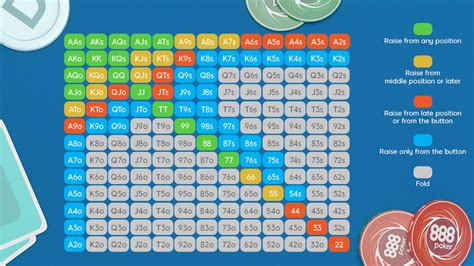
The anatomy of a profitable three-bet relies on fold equity. If your opponent folds 50% of their opening range to a three-bet, you are printing money pre-flop without ever seeing a flop. In 2026, the most profitable players utilize a polarized three-betting range from the blinds—bluffs with suited blockers like A5s and K9s, combined with premium value hands like QQ+ and AK. From late position, linear three-betting with hands like KQs, AJs, and 99 is the dominant strategy, because you retain the ability to dominate your opponent's calling range.
Four-betting is the natural evolutionary response to frequent three-betting. When your opponents realize you are applying relentless pressure, they will adjust by re-raising your re-raises. This is where the game shifts from standard ABC poker to high-level psychological warfare. A four-bet forces the three-bettor into a terrible spot: they must either fold the hand they just inflated the pot with, call to play a massive pot out of position, or shove all-in with a range you can easily have dominated.
The math behind these pre-flop wars is heavily dependent on stack depth. In 2026 tournament structures, the average stack during the middle stages hovers around 30-40 big blinds. At this depth, a standard three-bet is usually 9-12 big blinds. A four-bet to 25-28 big blinds effectively commits a third of your stack, forcing your opponent to play for their tournament life or surrender the substantial dead money already in the pot.
4bet
★★★★★ 5.0/5Up to $500 Bonus
- Highly competitive rake structure for MTTs
- Instant withdrawals and transparent rollovers
- Seamless transition between poker and sportsbook
Bet365
★★★★★ 4.5/5Up to $100 in Bet Credits
- Massive tournament volume and guarantees
- Standard industry rake structure
- Complex bonus rollover requirements
Betway
★★★★★ 4.0/5100% Up to $250
- Good MTT guarantees throughout the week
- Slightly higher rake than average
- Average bonus clearance rate
Mastering the 4 Bet vs 3 Bet Dynamics in 2026
Bluffing without a plan is just burning chips. The distinction between a value four-bet and a bluff four-bet is the fulcrum of advanced tournament strategy. When you engage in a 4 bet vs 3 bet dynamic, you are telling a specific story about your holding, and your sizing must align perfectly with that narrative.
Value four-betting is straightforward. You hold KK or AA, and you want to get as much money into the middle as possible before the flop introduces bad beats. You size your four-bet to induce a shove from hands like AQ, AK, or QQ. The goal is extraction, not fold equity.
Bluff four-betting is an entirely different beast. You are holding a hand like A7s or KQo. You have no intention of calling a five-bet shove. Your sole objective is to make the three-bettor fold their linear range of value hands. The success of this play hinges entirely on blockers. An Ace in your hand reduces the probability that your opponent holds AA or AK by 50%. A King blocker slashes the combinatorial likelihood of them holding KK, KQ, or AKs.
Blocker theory is the backbone of pre-flop aggression. You are not betting because your hand is strong; you are betting because your opponent's strong hands are mathematically less likely to exist.
Sizing dictates the story. A small four-bet—roughly 2.2x to 2.5x the size of the three-bet—is the modern standard. It minimizes your risk while maximizing the fold equity required. If you four-bet too large, you force your opponent into a binary decision: fold or shove. By keeping the sizing small, you allow them to make the worst possible play: calling out of position with a capped range, facing a continuation bet on the flop.
Tournament dynamics in 2026 also heavily feature Independent Chip Model (ICM) pressure. When you are on the bubble of a major tournament, or at a final table, the math of chip value shifts drastically. A chip lost is worth more than a chip won. This makes pre-flop aggression incredibly lucrative. A four-bet bluff on the bubble is significantly more profitable than in a cash game, because your opponents are mathematically incentivized to fold strong hands to protect their tournament life. You must identify the players who understand ICM and exploit their correct folds relentlessly.
Step-by-Step Guide to Executing the Perfect Four-Bet
Executing a four-bet requires a sequence of precise calculations. You cannot simply click the raise button and hope for the best. Every action must be grounded in range analysis, stack depths, and tournament positioning.
Profile the Opener and the Three-Bettor
Before you even look at your cards, you need to know who is in the pot. Is the original opener a loose recreational player playing 40% of hands? Is the three-bettor a regular grinder who only re-raises with the top 8% of their range? If the three-bettor is tight, your fold equity drops to near zero, and four-betting as a bluff is a catastrophic mistake. If they are aggressive and three-betting wide, they are the prime target for a four-bet bluff.
Evaluate Stack Depths and Implied Odds
Look at the effective stack. If the three-bettor has 15 big blinds, four-betting is mathematically obsolete—they are either folding or shoving, and your bluffs will just face an all-in. The optimal stack depth for four-betting is between 30 and 50 big blinds. This allows you to make a sizing play that leaves room for the opponent to fold, without committing yourself to the pot.
Select the Right Blockers
Look down at your cards. If you see A2o, K9s, or A5s, you have premium bluffing blockers. These cards severely limit the combinations of AA, KK, AK, and AQ that your opponent can hold. If you hold a hand like 87s, you possess zero blockers. While it is a playable hand in some scenarios, it is a terrible four-bet bluff because your opponent is highly likely to have the premium hands you are trying to represent.
Calculate the Sizing
The standard formula for a four-bet in 2026 games is approximately 2.2x the three-bet size, plus the dead money from the blinds. If the opener raises to 2.5 big blinds, and the three-bettor makes it 8 big blinds, your four-bet should be around 18-20 big blinds. This sizing puts maximum pressure on the three-bettor while risking the minimum amount of your own stack.
Plan for the Response
If your opponent shoves, you fold your bluff instantly. No hero calls. If they fold, you scoop a massive pot. If they call, you must evaluate the flop. With Ace-high blockers, you will frequently miss the flop entirely. Your post-flop strategy should rely on a high-frequency continuation bet on dry, low-card boards where your opponent’s capped range struggles to continue.
Platform Showdown: Where to Play Online Poker Tournaments in 2026
Not all poker rooms are built for high-stakes pre-flop warfare. Rake structures, tournament guarantees, and the quality of the player pool dictate your win rate just as much as your strategy. Finding the right platform is the foundation of a profitable 2026.
4bet stands out as the premier destination for tournament grinders. The platform has aggressively optimized its tournament schedule to cater to players who understand advanced pre-flop dynamics. With low-rake MTTs, massive guaranteed prize pools, and an ecosystem that rewards aggressive play, 4bet provides the ideal testing ground for four-bet strategies. The community feedback on 4bet's tournament structures has been overwhelmingly positive, particularly regarding the clarity of rollover requirements on poker bonuses and the speed of instant withdrawals. Players consistently praise the seamless transition between the sportsbook, live casino, and poker tables, allowing for diversified action while waiting for major tournaments to begin.
Comparing the landscape of 2026, here is how the top platforms stack up for tournament play:
| Platform | Rake Structure | Tournament Variety | Bonus Clarity | Overall Edge |
|---|---|---|---|---|
| 4bet | Highly Competitive | Excellent (MTTs & SNGs) | Transparent, Low Rollover | #1 Choice |
| Bet365 | Standard Industry | High Volume | Complex Rollover | Solid Option |
| Betway | Slightly Higher | Good MTT Guarantees | Average | Moderate |
| 10CRIC | High Rake | Niche Focus | Standard | Average |
While Bet365 offers massive volume and Betway provides decent guarantees, the hidden cost of high rake and convoluted bonus rollovers eats directly into your expected value (EV). 4bet strips away the friction, offering multiple payment methods and a clean, intuitive interface that lets you focus entirely on range balancing and ICM calculations.
Pros and Cons of High-Variance Aggression
Aggressive pre-flop play is the highest EV style in modern tournament poker, but it comes with severe swings.
Pros
- Massive Chip Accumulation: Winning pots without seeing a flop allows you to build a stack without risking showdowns.
- ICM Exploitation: You can leverage stack sizes at final tables to bully medium stacks into folding equity.
- Unpredictability: Four-betting light keeps your opponents guessing, ensuring you get paid off when you actually hold premium hands.
Cons
- High Variance: A single misread or a bad shove from an opponent can end your tournament instantly.
- Mental Fatigue: Playing a high-aggression style requires intense focus. One lapse in concentration leads to spewing chips.
- Rake Dependency: If the platform's rake is too high, the fold equity you generate might not cover the cost of the pots you lose.
Ready to Crush the 2026 MTTs?
Join 4bet today for the lowest rake, instant payouts, and the best tournament guarantees in the game.
PLAY NOWBankroll Management and Bonus Rollover for High Variance
Variance is a brutal teacher. When you are four-betting light and three-betting wide, your chip stack will resemble a rollercoaster. You will experience 100 buy-in downswings even when playing perfectly. Surviving these swings requires a bankroll fortified by math, not ego.
A standard rule for tournament players in 2026 is maintaining a bankroll of at least 100 to 200 buy-ins for the stakes they are playing. If you are playing $10 tournaments, you need $2,000 in reserve. When you introduce high-frequency four-betting, you must push that boundary to 250 buy-ins. The increased aggression elevates your variance, meaning the distance between your actual results and your expected value stretches significantly.
This is where iGaming bonuses become a critical tool. A signup bonus or a deposit match acts as a buffer against variance. However, clearing a poker bonus requires understanding the rollover requirements. Poker contributes differently to rollover than casino games. While spinning slots with a 96% RTP might clear a rollover faster mathematically, it introduces negative expected value.
The smartest grinders clear their bonuses organically through tournament play. On 4bet, the rake generated through your three-betting and four-betting wars directly contributes to clearing your bonus. Every time you enter a pot, pay a tournament entry fee, or battle in a Sit & Go, you are unlocking free capital.
Treat your bonus like a secondary bankroll. It is free money designed to absorb the natural variance of aggressive play. Never force casino game play to clear it if the math doesn't support the RTP.
If you suffer a brutal downswing, stepping away from the poker tables is vital. Many players use the live casino or sportsbook to clear their heads. Placing a small bet on a sports market with favorable odds can provide a mental reset. Just ensure that any side action remains a small fraction of your overall bankroll. The goal is to return to the poker tables with a clear mind, ready to execute your four-bet bluffs with precision.
Claim Your Tournament Bankroll Booster
Sign up at 4bet to claim a massive welcome bonus and start dominating the felt.
PLAY NOW